
| TL;DR – Patent examiner interviews are a proven prosecution tool that can advance applications faster and reduce back-and-forth with the USPTO. For corporate IP teams, the key is examiner-specific data: knowing when to interview, which examiners respond to interviews, and what statistics predict success. This playbook covers the metrics, timing, and tactics that transform interviews from a procedural checkbox into a strategic lever for prosecution. |
No two patent examiners are the same. So why does your team use the same playbook with every one of them?
For instance, in Art Unit 3621, three examiners sit within feet of each other, and yet their allowance rates tell three completely different stories.
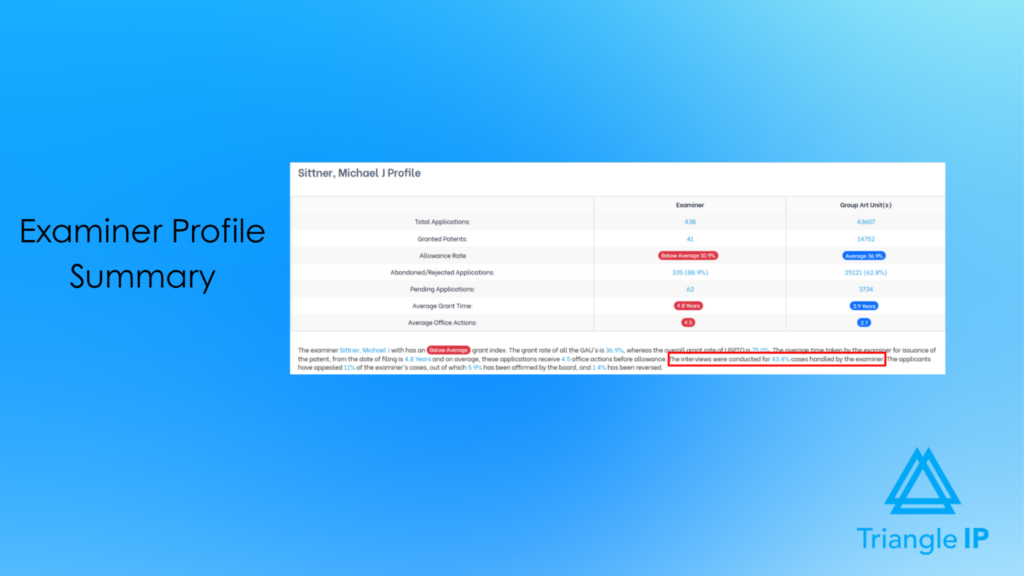
Michael J. Sittner interviews in just 43.4% of cases. Ansari, Azam A., interviews in 46.7%. Detweiler, James M., interviews in only 36.7%. Same art unit. Same technology centre. Wildly different engagement patterns.
For a corporate patent team, a file landing on Sittner’s desk demands a fundamentally different prosecution strategy than one landing on Ansari’s.
The wrong examiner interview strategy doesn’t just delay allowance. It inflates prosecution costs. And it can quietly kill patents that should have been issued.
So, the question isn’t whether to interview. It’s when, with whom, and based on what data.
This article is created for corporate and IP teams looking for exactly those answers. Every metric below is drawn from live USPTO prosecution data, using the examiner analysis tool – not theory.
Let’s start with the decision that shapes everything else.
When to Request an Interview With a Patent Examiner?
Once a first refusal has been issued, patent applicants are entitled to an interview with their examiner. But entitlement is not the same as strategy.
Not every office action deserves an interview. Not every examiner responds to one. The key is matching the situation to the examiner’s data profile.
Here are the three situations where a patent examiner interview call is statistically a clever move.
1. After the First Office Action (Non-Final)
This is your highest-leverage window. The USPTO’s data shows that interviews held earlier in prosecution have a greater impact on advancing applications.
An interview here can clarify the examiner’s real concerns, surface allowable subject matter, and often avoid a final rejection entirely, saving the cost and delay of an RCE.
From a corporate perspective, this is where examiner-specific data matters most. An examiner with a low allowance rate needs a different IP strategy than one with higher allowance rates.
The former may require you to lead with claim amendments and prior art distinctions; the latter may simply need clarification on claim scope.
2. When the Examiner Signals Allowable Subject Matter
If the office action says some of your patent claims are allowable, but rejects the broader ones.
That means the examiner already thinks your technology is patentable; they just want you to define it more specifically.
A 30-minute interview to agree on the exact scope beats three months of written back-and-forth. This is particularly valuable for portfolio applications where speed-to-market drives filing strategy.
3. After Final Rejection
Once the examiner issues a final rejection, getting an interview is much harder. The USPTO now limits examiners to one interview per application, and they need supervisor approval for any extra time. That means your first interview is increasingly your only shot.
- When to do it: You have a small, specific change to your claims that you know will fix the problem. Not a new argument. Not a rewrite. A tweak.
- When to skip it: You want to explain your position again, argue the law, or try something fundamentally new. At this stage, that burns your one interview and gets you nowhere. File an appeal or an RCE instead, and save your budget for winnable fights.
The data says the single biggest lever is timing. Here’s how to get it right.
Cracking the Black Box Called Patent Examiner Interview For Corporate Teams
Your outside counsel handles the argument; meanwhile, you need to decide which cases deserve the budget and which examiners are burning it.
Here are the four examiner insights that let you steer patent examiner interview strategy:
- Allowance Rate: Your First “Go / No-Go” Signal
- Interview Path: How Grants Actually Happen
- Peer Benchmark: Who Succeeds and How
- Interview Rate: Are People Engaging or Avoiding?
1. The Allowance Rate: Your First “Go / No-Go” Signal
Compare the examiner’s allowance rate to their specific art unit average and the USPTO average. This tells you whether the difficulty lies in the technology or in the person reviewing your application.
If the examiner’s allowance rate sits well below their art unit, you’re dealing with a tough examiner. Not a tough art unit.
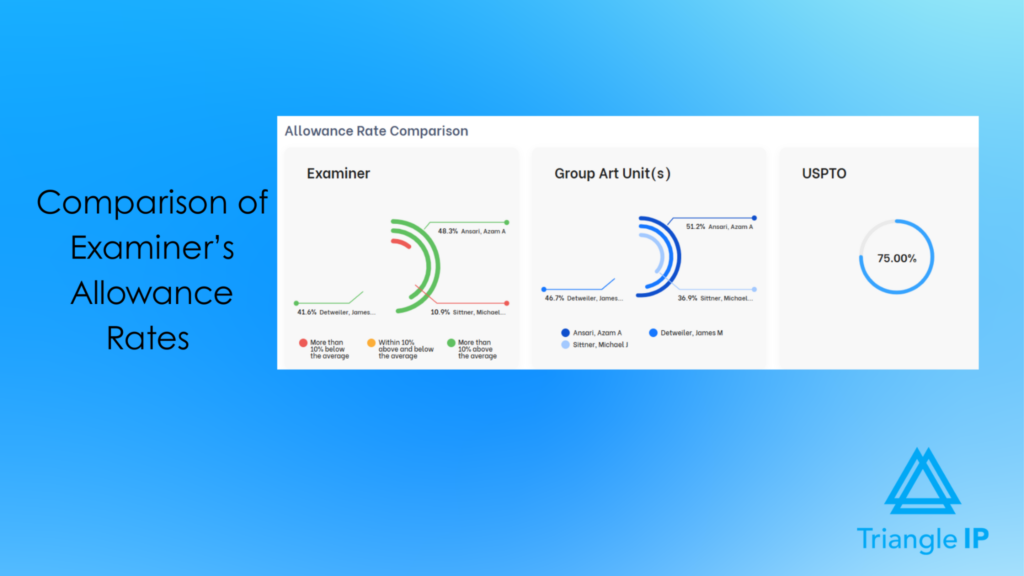
- When an examiner runs 20% or more below the art unit average: Interview early, or consider continuation/appeal. Do not cycle through written responses hoping for a turnaround.
- When the examiner’s allowance is near the art unit average: Standard prosecution. Interview if the rejection is unclear.
2. The Interview Path: How Grants Actually Happen
Some examiners show a meaningful jump in allowance post-RCE. Others show virtually no movement.
When the interview path shows a meaningful number of grants, especially relative to the RCE path, that signals the examiner is persuadable in conversation.
So, the call is not just cheaper than an RCE but also a viable route to allowance.
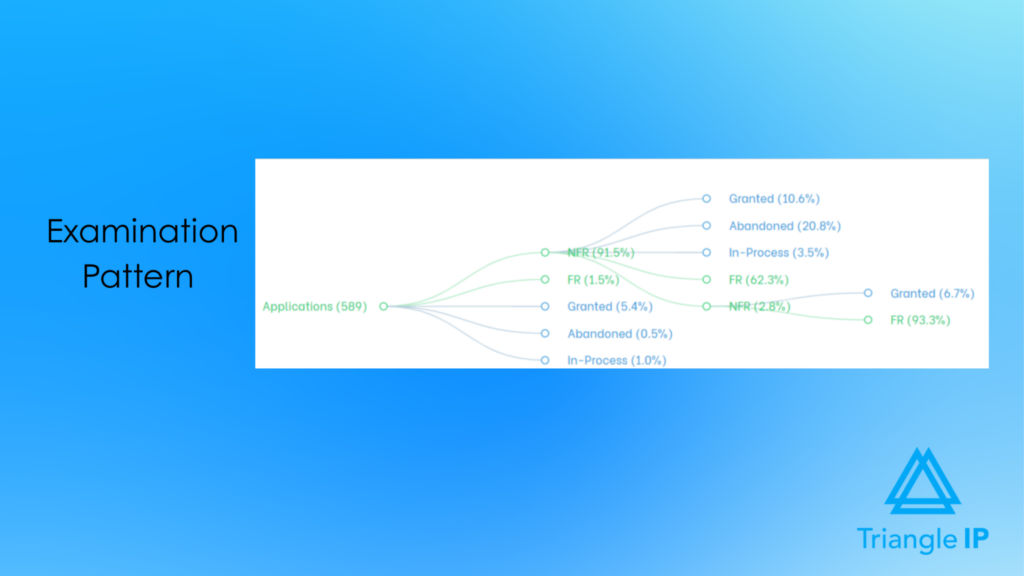
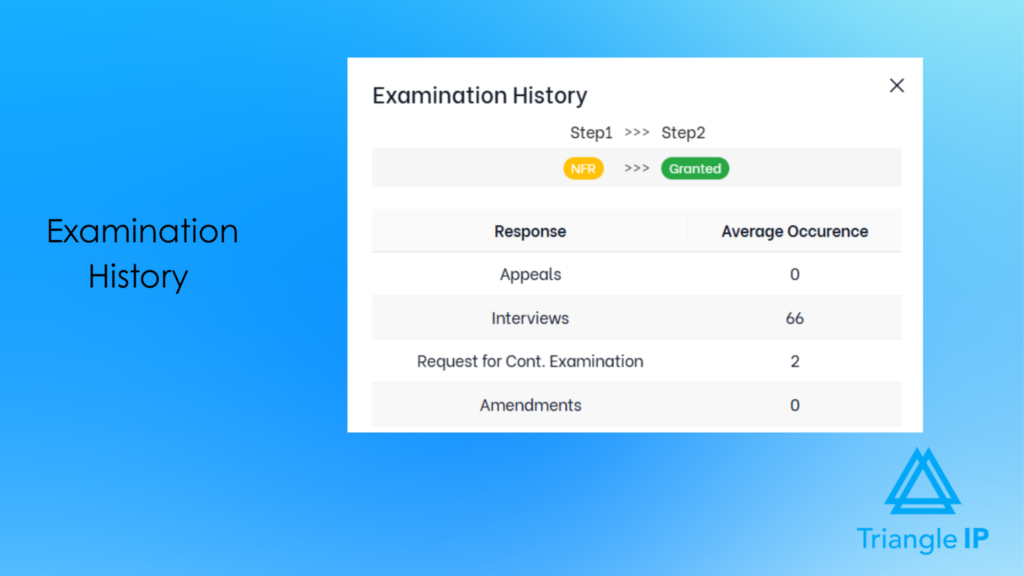
Moreover, you can drill into any node to see how applications actually got from rejection to grant via interview, RCE, appeal, or amendment.
3. The Peer Benchmark: Who Succeeds and How
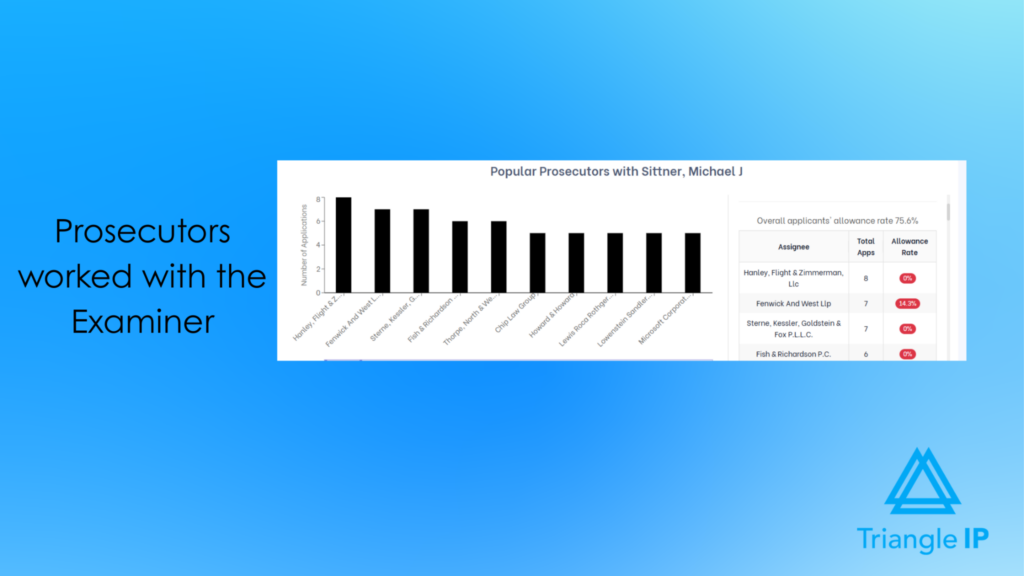
Look at which firms or companies have succeeded with this examiner and how.
When peers consistently struggle, this is an examiner-specific challenge. Interview strategy matters more than counsel selection.
However, when specific peers succeed, their interview approach and claim amendments are worth understanding before your own call.
Turn the peer benchmarking insights into a strategy. Download the Patent Incentive Guide, a step-by-step resource for corporate IP teams on budget allocation and prosecution strategy.
4. The Interview Rate: Are People Engaging or Avoiding?
Look at what percentage of applicants actually get this examiner on the phone.
- Low rate (e.g., <30%) + low allowance: Applicants are giving up. Interviewing puts you in the minority that engages.
- High rate (e.g., >60%) + low allowance: Many people interview, but few win. The calls aren’t moving the needle.
- High rate + high allowance: Interviews are working. Budget for them.
These four insights turn examiner data into an interview strategy. However, pulling them from USPTO records, attorney emails, and scattered docketing systems is unmanageable.
The TIP ToolTM fixes this. All the insights you need from idea generation to post-filing prosecution live in a single platform.
Beyond Examiner Interviews: How Triangle IP Supports End-to-End Patent Management For Corporate Teams
Choosing the right patent examiner analytics tool is important. But solving only for the interview strategy isn’t enough.
The patent lifecycle has many stages beyond interviews, and the TIP tool has features to support you at each stage.
Here is how the platform connects every stage:
- Idea Capture: Engineers submit inventions through a simple form; ideas flow through a visual pipeline from capture to filing.
- Prosecutor Analysis: See allowance rates, office actions, and interview patterns for examiners; benchmark attorneys against the art units and specific examiners they faced.
- Art Unit Predictor: Identify likely USPTO art units and their historical allowance rates before drafting.
- Portfolio Tracking: Auto-sync with USPTO PAIR for real-time status, deadlines, and office actions, no manual docketing.
- Patent Family Tree: Map parent, continuation, and divisional relationships instantly to spot gaps and expansion opportunities.
- Real-Time Collaboration: Inventors, managers, and counsel review drafts and track changes in one place.
Book a personalised demo from the form below and see exactly where the TIP Tool™ fits your workflow.
Disclaimer: The statistics in this article were fetched from the TIP Tool at the time of publishing. These numbers reflect historical USPTO prosecution data and are subject to change as examiners continue to examine additional patent applications. For the most current examiner metrics, consult the TIP Tool directly.
Frequently Asked Questions about Examiner Interviews
1. Can I Switch Attorneys Mid-prosecution And Retain Interview Momentum?
Yes, but carefully. New counsel should review all prior interview summaries and correspondence to maintain consistency. A fresh perspective can help, but contradictory positions can damage credibility with the examiner. Ensure your new attorney has access to the full prosecution history and any recorded interview outcomes before the next call.
2. How Do I Pick Which Applications to Prioritize for Interviews?
Prioritize high-value applications with low-allowance examiners, applications with clear amendment paths after the first office action, and portfolio-critical patents with tight product launch timelines.
3. How Do I Request an Examiner Interview?
There are three ways to request an examiner interview:
- USPTO Automated Interview Request (AIR) Form: You can submit it through the Patent Centre. The request is automatically entered on record. So, the examiner must respond within two business days. Recommended for corporate teams for its paper trail.
- PTOL-413A Form: The legacy paper form. Still valid, but lacks the automatic tracking and supervisor oversight of AIR.
- Direct Phone Call: Use the contact information in the office action or the USPTO Employee Locator. Best for follow-up scheduling, not initial requests.