
This article was originally published on Entrepreneur. You can read the original version here.
I talk to founders every week who tell me patents aren’t their priority now. They’re focused on building products, shipping them to customers, and pitching investors. Many assume IP protection can wait.
But if you look at who’s getting funded and who’s getting acquired, a different picture starts to emerge. An EPO–EUIPO study found that startups with patents are 10 times as likely to raise early-stage funding.
In this piece, I’ll unpack the most common patent misconceptions I hear from founders. Later, I’ll share how getting your strategy right early can unlock capital, protection, and leverage when it matters most to your startup.
So let’s start with the myths.
Patent Misconception #1: We Don’t Need Patents to Succeed
I hear this one constantly: “Patents aren’t really necessary to build a successful company.”
And yes, you’ll find plenty of stories and a handful of high‑profile outliers. One is WhatsApp, with a few patents, and it is still sold for billions.
But that’s the exception, not the rule.
WhatsApp scaled rapidly in a narrow window when the messaging infrastructure was evolving. Later acquired by Facebook, a company with tens of thousands of patents and a deep IP strategy. Most startups don’t operate in that environment.
So here’s my advice: Scan your ecosystem. What are the serious players doing, the ones you want to compete with or be acquired by? Chances are, they’re filing. So should you — at least hedge your bets.
Many innovative startups are doing the same. Take Solenic Medical. They filed early, and it helped them raise $5.1 million. That’s not luck. That’s leverage.
Patent Misconception #2: We’ll File a Patent Once the Product is Ready
Founders tell me this all the time: “We’ll sort out patents once the product’s ready.“
And I get it, you’re focused on pitching, building, getting to market, etc. But here’s the problem: If you show your tech before you file, you might lose the right to protect it. Completely.
You don’t have to take my word for it. Courts have ruled this again and again. In Netscape v. Konrad, the inventor demoed too early — patent gone. Minerva Surgical showed their device at a trade show, then filed. The court tossed it.
This didn’t happen because these ideas weren’t strong. But because they waited, their own marketing effort spoiled any possibility of protection.
That’s how patent law works. You don’t get a second chance.
So file early, even a quick provisional will work. It’s cheap, locks in your date, and keeps your options open.
Because once it’s public, it’s out of your hands and given to the public domain in many cases.
Patent Misconception #3: Not Every Idea is Patentable
Founders often assume their innovation isn’t “groundbreaking” enough. They say: “We’re not inventing anything new, just improving something that already exists.”
I hear this all the time. But most patents aren’t for game-changing inventions. They’re for smart improvements that solve problems better than before. Inventors are often too humble to appreciate the patentability, so they seek a professional opinion.
Let me give you an example. Edison didn’t invent the first light bulb. Others built versions, but they didn’t last. Edison tested thousands of materials before finding carbonized bamboo. That made the bulb last long enough to replace oil lamps. It worked as an incremental advancement, and it was a patentable roadblock that justified commercialization.
I’ve seen the same pattern with startups. One change in design, one better method, and suddenly the product has real IP value for an incremental feature that every competitor will need to add to their alternative to remain competitive.
So don’t underestimate your work. If it’s new, useful, and solves a problem, it might be patentable.
Patent Misconception #4: Patents are Too Expensive for Startups
Founders often assume patents are unaffordable. They’re only for big companies with deep pockets. But that’s a misunderstanding of how patent costs actually work.
In one of my earlier articles, I outlined how startups can manage IP costs strategically from day one.
Yes, a U.S. patent might cost up to $50,000 over its lifetime. But smart teams use provisionals to delay costs, limit filings to high-value ideas, and plan ahead.
The cost isn’t the problem. Poor planning is. When you treat IP like a business asset, it becomes affordable and powerful.
Patent Misconception #5: Why Patent if I don’t Plan to Litigate?
Thinking that patents are only valuable if you want to litigate is a common disconnect with what sophisticated enterprises know. Litigation is just one use and often the least relevant for early-stage companies.
Take Tesla. In its early days, it filed key patents around its battery systems and charging tech. But when it opened those patents in 2014, it wasn’t abandoning IP. It was using it to lead the market. Those early filings signaled technical leadership, attracted investment, and helped establish Tesla’s ecosystem. Even to litigate those patents against a competitor recently.
That’s the real power of IP: signaling strength, building trust, and opening doors.
So how do you build that kind of foundation from day one without hurting your budget and other resources?
Here’s a roadmap I’ve seen work for startups.
Moving Beyond Patent Misconceptions: A Strategic IP Roadmap for Startups
After two decades advising startups on building IP portfolios that attract funding and strengthen exit value, here’s what I recommend:
- Don’t let ideas slip through the cracks: Capture innovations enterprise-wide. Product, engineering, and support teams often surface technical solutions. Set up a simple system where any team can submit ideas easily, without friction.
- Filter and file only high-quality patent ideas: Not every idea is worth protecting. Focus on innovations tied to revenue, defensibility, or investor interest. Use attorney input early to frame what’s protectable, increasing the likelihood of success.
- File strategically to save cost and create leverage: File provisional applications to secure early dates. Leverage government fee discounts and defer global spend through the PCT. File where IP adds real business value.
- Align IP with business milestones: Time filings around fundraising, product launches, and partnerships. A well-timed application strengthens your pitch or valuation.
- Revisit and refine quarterly: Your product evolves, so should your IP. Realign filings to what still drives business value.
None of this requires building a large legal department or slowing down execution. It simply means putting a lightweight, repeatable process in place. One that ensures ideas are captured consistently, evaluated against real business priorities, and filed with timing and intent.
When that process exists, patent decisions are proactive and strategic. When it doesn’t, they tend to be reactive and rushed.
And that disconnect is where most startups fall short, not in innovation, but in having the right system to manage it.
The TIP Tool™ is designed to provide that foundation by addressing a few core needs.
Avoiding Patent Misconceptions by Building Early Infrastructure with the TIP Tool™
Let’s be honest. Most startups don’t plan their patent strategy early. And that’s how many patent misconceptions take hold. IP becomes urgent right before a launch, a fundraise, or when a competitor makes a move. That’s when things get rushed.
The TIP Tool™ helps you get ahead of that. A leading global tech company used the TIP Tool™ to increase idea submissions by 30%. It also helped them move from idea to filing 25% faster and boost patent success rates by 20%, simply by putting the right structure in place early.
Here’s how it helps you build that foundation from day one:
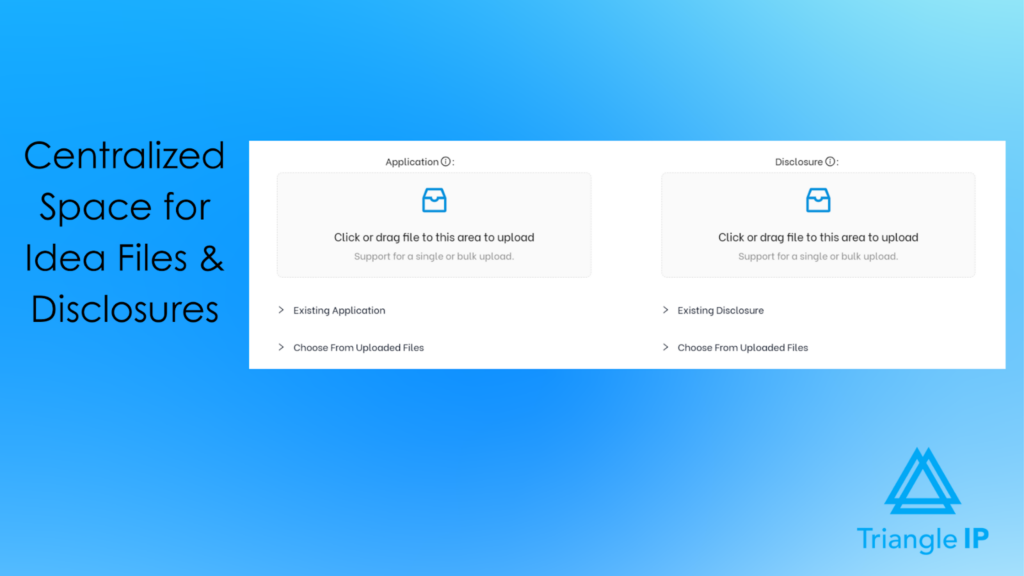
Centralized Idea Capture Across Teams
Engineering, product, and customer-facing teams can log potential inventions in a single shared workspace, creating a reliable system of record instead of scattered notes, emails, or ad-hoc conversations.
Clear Prioritization of What to Protect
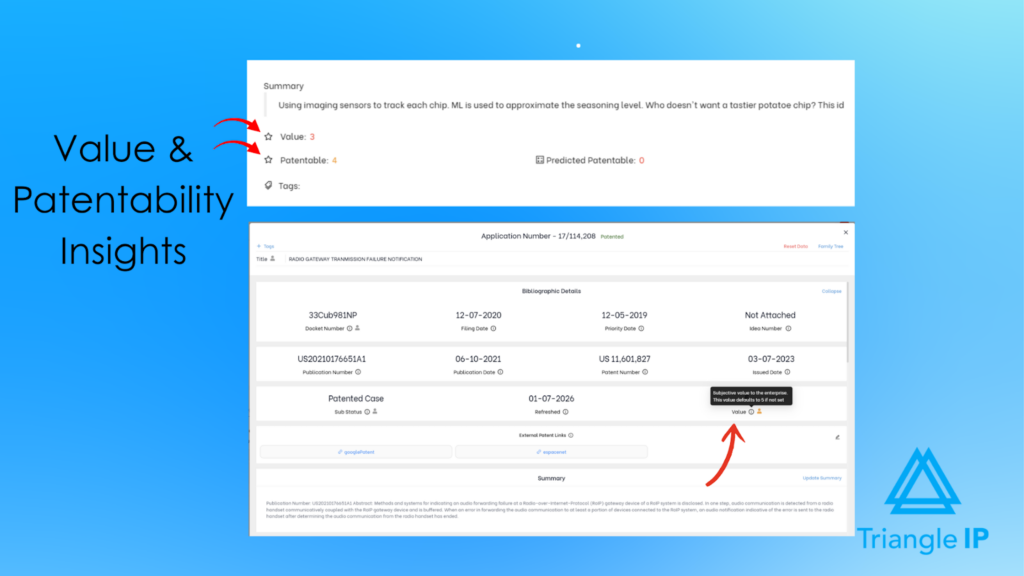
Ideas are reviewed and compared using business value, strategic relevance, and patentability indicators, allowing teams to concentrate filings on innovations that support defensibility, fundraising, or long-term differentiation.
Early Visibility into Cost and Timing
Patent milestones and projected costs are visible upfront, giving founders the ability to plan filings intentionally rather than delaying decisions due to uncertainty or budget surprises.

Alignment with Business Milestones
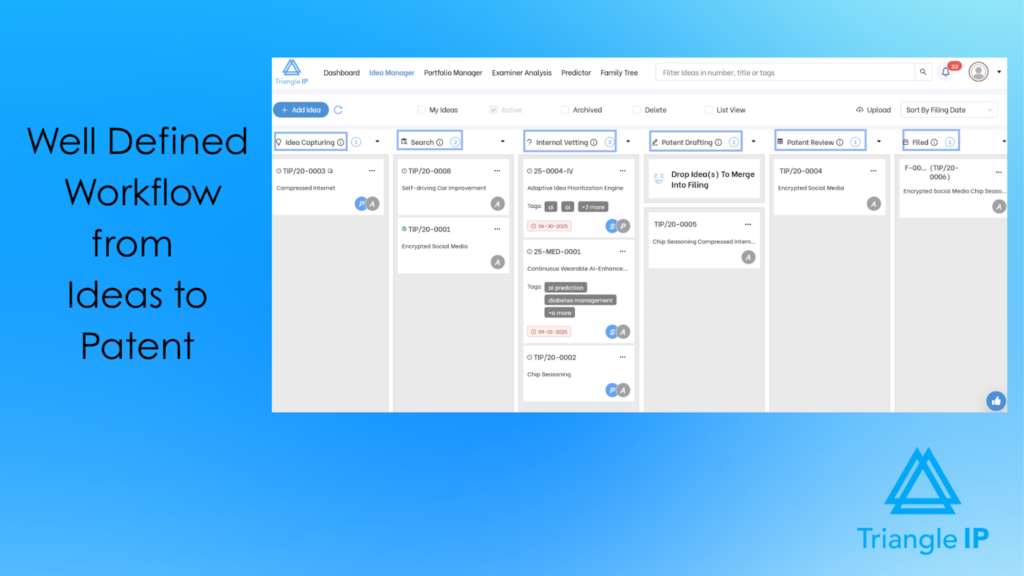
Filing deadlines and workflow stages make it possible to plan patent activity around fundraising rounds, product launches, and partnerships, ensuring IP is in place when it strengthens the company’s narrative most.
Shared Visibility with Outside Counsel
Founders, internal teams, and attorneys share a single view of ideas, filings, and status, reducing last-minute rushes, duplicate effort, and miscommunication.
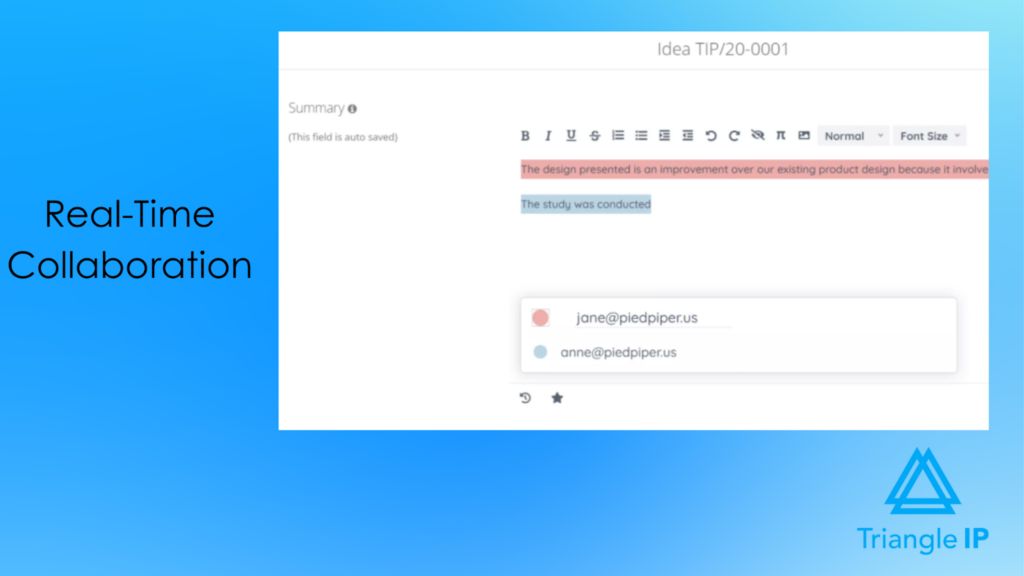
Used early, the TIP ToolTM helps patents function as infrastructure, something the company builds with intent, revisits regularly, and uses to support growth.

Try the TIP Tool™ for free and see how a more structured, deliberate approach to IP can support your startup from the earliest stages.
Frequently Asked Questions (FAQs)
- How Do International Founders or Globally Distributed Teams Navigate Patent Timing Across Different Jurisdictions?
International timing is where many patent misconceptions lead to costly mistakes.
Start with your priority date. Once you file your first application, you typically have 12 months to file in other countries while keeping that original date. Many startups file a provisional first, then a PCT within that year to delay high international costs and decide where to enter the national phase around 30 months.
The biggest risk? Public disclosure. Europe has almost no grace period, while the U.S. gives limited flexibility. So file before demos, launches, or investor pitches. Distributed teams often lose time on admin, not strategy.
Related: Foreign Patent Filing: 5 Strategies to Develop an International Patent Portfolio
- What Risks Do Founders Face if They Over-File Patents Too Early Without a Clear Product-Market Fit?
This is where patent misconceptions can quietly damage long-term strategy.
Patent term generally runs 20 years from your earliest filing, so filing too early can shorten meaningful protection once you scale. Most applications are published within 18 months, potentially exposing your roadmap before traction.
If your product pivots, which many do, your claims may no longer cover what matters most. That leads to extra filings, extra cost, and a portfolio that looks strong but lacks alignment.
- How Should Startups Balance Patents Against Trade Secrets, Speed to Market, or First-Mover Advantage?
Getting the balance right between patents, trade secrets, and speed requires moving beyond common patent misconceptions and focusing on what actually creates a durable advantage.
It really comes down to what creates your edge. If something is easy to reverse-engineer (like hardware or visible product features), patents can be powerful. If it’s internal like algorithms, data pipelines, pricing models, trade secrets may be better. As long as you can keep them confidential.
And if your advantage is distribution, brand, or network effects, speed often matters more than formal IP. Many smart startups mix approaches: patent the core mechanism, keep implementation details secret, and move fast.
Protect what’s durable, not everything, and revisit the balance as the company evolves.