
| TL;DR– AppColl is strong at managing patent prosecution, from docketing and workflows to disclosures and budgets. It brings operational clarity to IP teams. But as patent decisions face greater scrutiny, many teams need deeper predictive insights into filing outcomes, examiner behavior, and projected costs. Here, we outline what AppColl does well and where tools like TIP Tool™ add forecasting, examiner analytics, and portfolio-level insight to strengthen decision-making. If your team is being asked to justify filings and allocate budget strategically, this article shows what that next layer looks like. |
For years, patent management software had a simple mission: keep everything organized.
Deadlines. Office actions. Filing dates. Budgets. Documents.
Platforms like AppColl became popular because they brought structure and reliability to prosecution workflows. Whether through AppColl docketing, AppColl Prosecution Manager™, or its Invention Manager™, the platform helps law firms and corporate IP teams stay compliant and in control.
And for many organizations, that’s exactly what they need. But the conversation around patent management is changing.
As portfolios grow and legal spend increases, IP leaders are no longer asking only, “Are we tracking everything correctly?”
They’re asking, “Are we filing and prosecuting the right way?”
That’s where the discussion about AppColl and what might complement or enhance it, becomes interesting.
AppColl Is Built for Prosecution Management — Not Predictive Strategy
Let’s be clear: AppColl is a comprehensive IP management platform built to run prosecution efficiently.
AppColl Prosecution Manager™ centralizes docketing, matters, prior art, billing, reporting, and document storage in one cloud-based system. For law firms, this streamlines patent and trademark workflows with automated task management and USPTO integrations. For corporate IP teams, AppColl PM Corporate™ adds budget tracking, invoice approval workflows, and spend forecasting. AppColl Invention Manager™ structures disclosure intake, approval flows, scoring, and inventor award programs. AppColl pricing follows a flexible subscription model.
In short, AppColl focuses on managing prosecution workflows and portfolio administration.
What it is not designed to do is forecast how that prosecution will unfold.
AppColl’s primary strength lies in prosecution management rather than predictive filing analytics such as pre-filing Art Unit forecasting or examiner probability modeling.
For teams focused primarily on organization and compliance, that distinction may not matter.
But when filing quality, cost exposure, and outcome probability become priorities, the evaluation criteria shift. At that point, teams begin looking for tools that add forecasting and decision support alongside prosecution management.
What to Look for in an AppColl Alternative
If you’re evaluating an AppColl alternative, the question probably isn’t about document storage or workflow automation. AppColl already handles those well.
The real question is whether your team needs more visibility into outcomes.
Modern IP departments increasingly look for tools that provide:
- Predictive filing intelligence, such as estimating likely Art Unit assignment and reviewing historical allowance behavior before filing.
- Examiner-level analytics, including allowance rates, office action frequency, and prosecution tendencies, once an examiner is assigned.
- Prosecution forecasting, including estimates of time-to-grant, expected argument rounds, and potential cost exposure.
- Portfolio-level performance visibility, allowing leadership to see prosecution efficiency patterns across the entire portfolio.
- Integration with existing systems, so new tools don’t disrupt established AppColl docketing workflows.
These capabilities don’t replace prosecution management. They strengthen it. And that distinction is important.
What Firms Using AppColl Need Next
As IP becomes more strategic, leadership expectations shift.
General counsel and executives want to understand return on investment. Product teams want patent portfolios aligned with roadmaps. Finance teams want clearer cost forecasting.
At that point, tracking deadlines isn’t enough. Teams need to understand probability.
How likely is this filing to succeed?
How difficult is this examiner historically?
Are we over-investing in low-probability applications?
AppColl ensures the process runs smoothly. But answering those questions requires a different layer of intelligence.
That’s where predictive insights become critical. And that’s the layer the TIP Tool™ by Triangle IP provides.
The TIP Tool™: A Strategic Intelligence Layer Beyond AppColl
The TIP Tool™ by TriangleIP is a patent and innovation management platform designed to help organizations make smarter, data-driven patent decisions from idea to grant and patent portfolio management.
While traditional systems focus on docketing and task management, the TIP Tool™ goes further. It adds a layer of strategic intelligence, helping teams evaluate which ideas to file, how to position them, and how to navigate prosecution more effectively.
It’s built for startups shaping their IP strategy, enterprises managing large portfolios, individual inventors who want structure and clarity, and patent practitioners looking for deeper prosecution insight.
The TIP Tool™ isn’t just another prosecution tracker. It’s a decision-support platform that complements, and in some cases strengthens, systems like AppColl when insight matters more than workflow alone.
Core Capabilities of the TIP Tool™
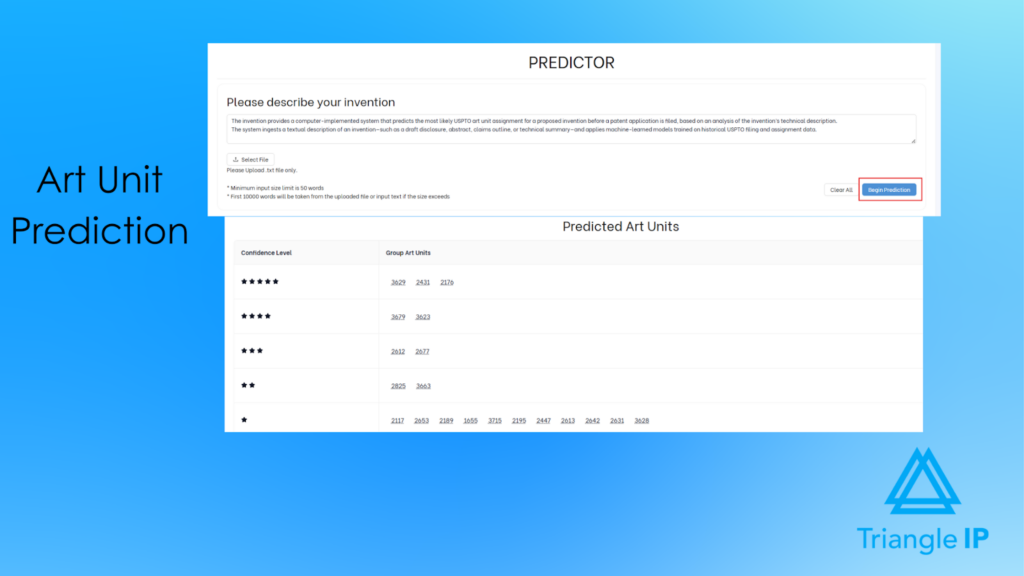
Before filing, the TIP Tool™ analyzes invention disclosures to predict likely USPTO Art Unit assignment and surfaces historical allowance data tied to those units. This allows drafting teams to refine strategy before committing to prosecution.
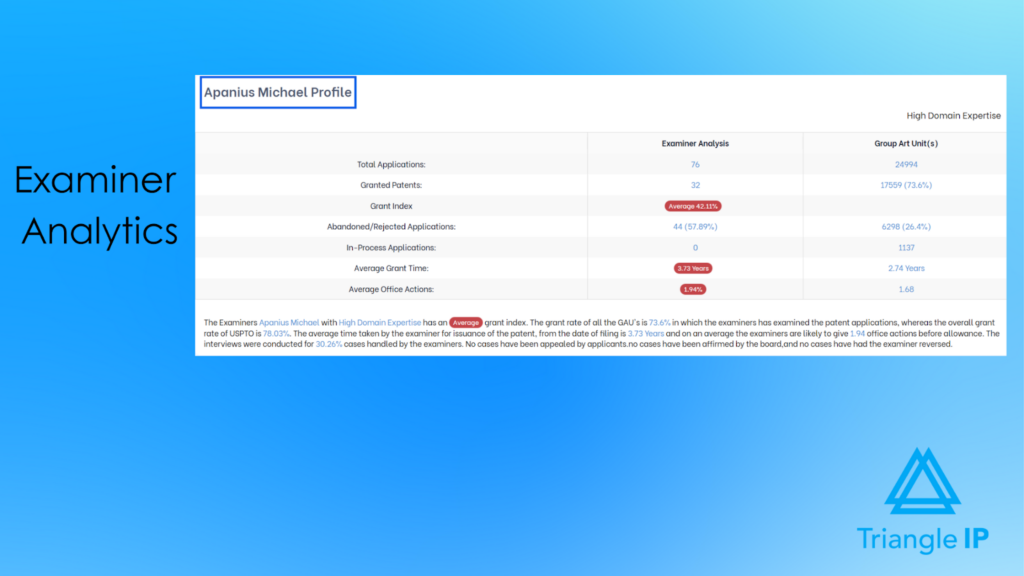
Once an examiner is assigned, TIP Tool™ provides detailed Examiner Analysis dashboards, including allowance rate comparisons, office action averages, RCE trends, and time-to-allowance patterns. Instead of reacting to office actions in isolation, teams gain context.
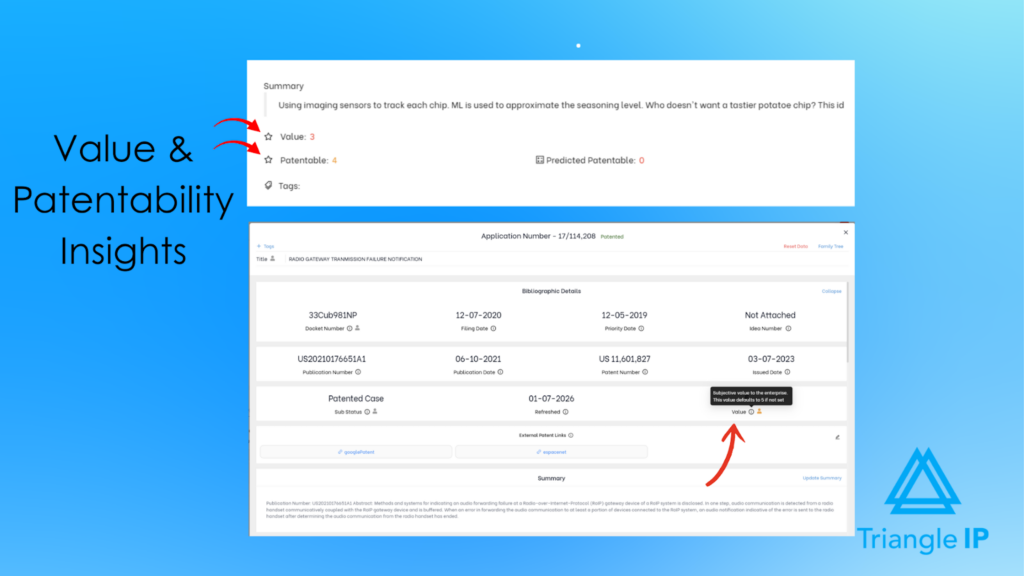
Patentability scores evolve dynamically as cases progress, updating based on real examiner data.
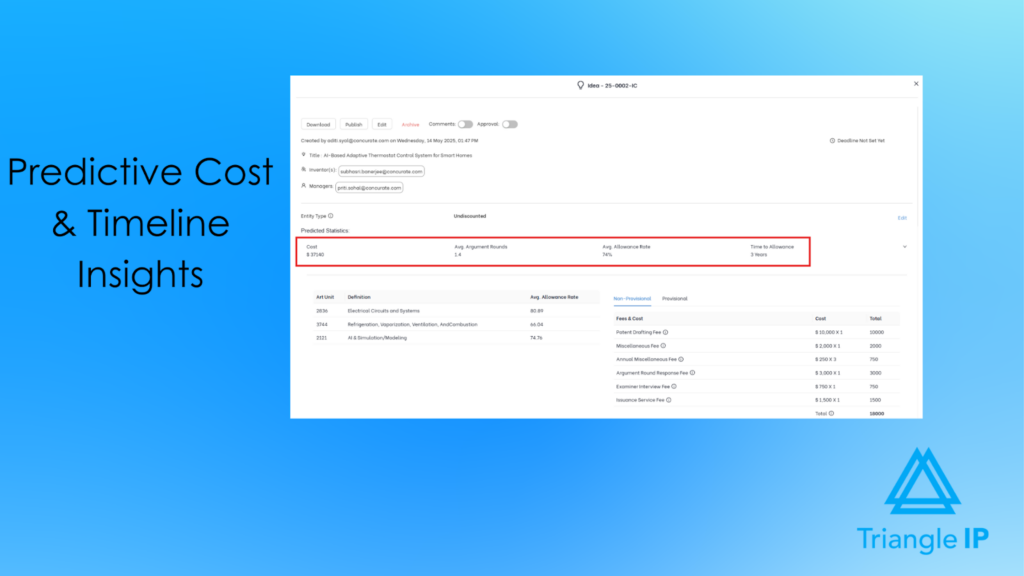
The platform also projects expected argument rounds and estimated time to grant. It separately estimates potential prosecution cost exposure based on historical patterns, helping teams allocate budget more strategically.
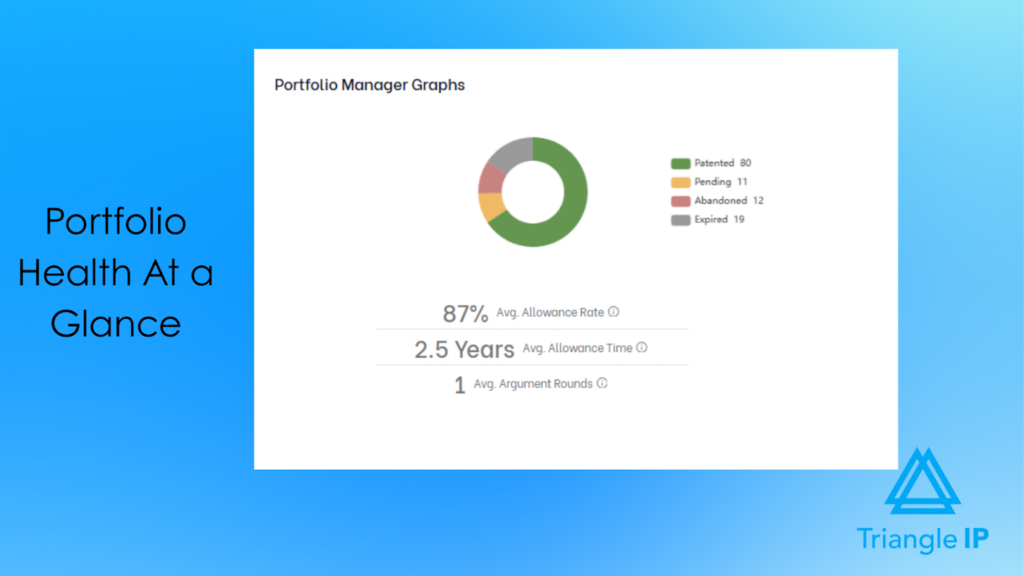
Meanwhile, portfolio-level visualizations highlight prosecution efficiency trends and status distribution across the organization.
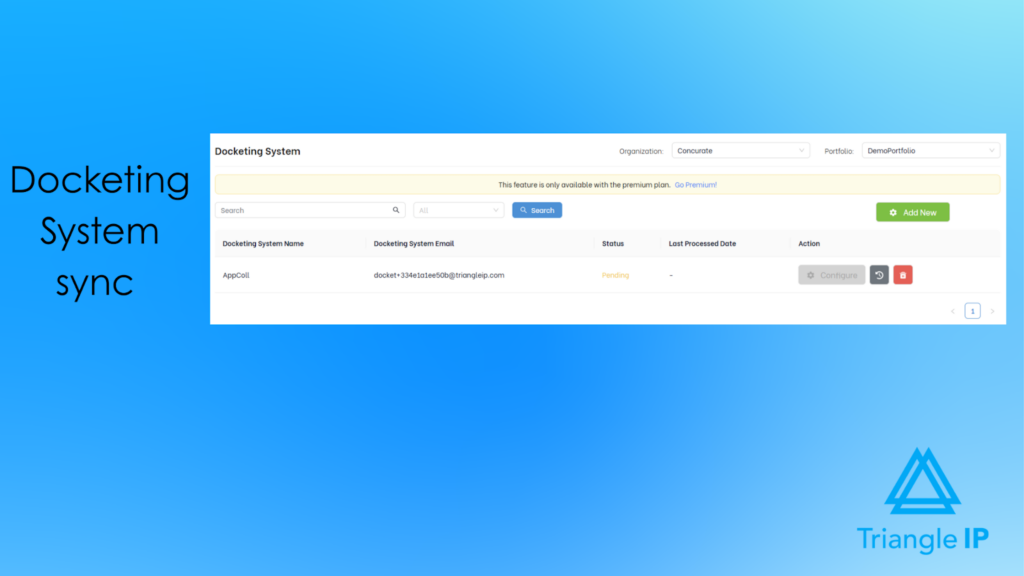
For organizations already using AppColl docketing, the TIP Tool™ offers Docketing System Sync, enabling structured data imports without manual spreadsheet reformatting. This allows firms to maintain operational infrastructure while layering in strategic analytics.
So that’s what the TIP Tool™ brings to the table.
Now you’re probably wondering: what does it actually cost, and how do we get started?
It’s pretty straightforward. You can begin small, see how it fits into your workflow.
TIP Tool™ Pricing, Demo, and Trial Options
The TIP Tool™ uses flexible pricing to accommodate teams at different stages of growth.
- Free Plan ($0 forever): A simple way to get started, with support for up to 10 users.
- Premium Plan ($50 per month): Affordable monthly pricing for growing teams that need additional users, storage, and functionality.
- Custom Plan: Designed for large enterprises with advanced requirements. Contact the team to create your plan.
Optional add-ons:
- Examiner Analysis: $5 per user per month
- Art Unit Predictor: $5 per user per month
- Patent Family Tree Generator: Included free with any personal-level tool, or available at $1 per user per month at the organization level (minimum 10 users)
For more details, visit the pricing page.
For teams exploring the platform, the TIP Tool™ offers demo access and a no-strings-attached free plan, allowing organizations to test predictive analytics before committing.
From AppColl Docketing to Strategic Patent Intelligence with the TIP ToolTM
AppColl remains a strong choice for operational IP management. It brings structure to prosecution, clarity to workflows, and control to budgets.
But as patent strategy becomes more data-driven, many firms realize that managing the process is only half the equation.
The other half is improving outcomes.
If your team is satisfied with tracking and compliance, AppColl may be exactly what you need.
If your team is looking to file smarter, forecast risk, and align prosecution decisions with business goals, adding predictive intelligence becomes essential.
That’s the space the TIP Tool™ was built for.
Beyond prosecution analytics, the TIP Tool™ strengthens how innovation is evaluated and governed across the organization through:
- Structured idea capture and internal vetting workflows
- Custom value and patentability scoring frameworks
- Tag-based portfolio segmentation by product line or business unit
- Patent Family Tree visualization for continuation clarity
- Role-based dashboards tailored to inventors, managers, and prosecutors
- Enterprise-wide collaboration in a centralized platform
The TIP Tool™ is all about turning IP from an administrative function into a strategic one.

Ready to Strengthen Your Patent Strategy?
Explore the TIP Tool™ and see how predictive Art Unit insights, examiner analytics, and portfolio intelligence can complement or elevate your AppColl workflow.
Book a demo or start your free plan today.
Disclaimer: The information in this article/review is sourced from the internet and may not be entirely accurate or up-to-date. We recommend visiting the respective software websites for the most current and reliable information. The opinions expressed here are those of the author and may not reflect the views of Triangle IP. We are not liable for any consequences that may arise from relying on the information provided in this article/review.
FAQs
1. How Accurate Are the Art Unit and Examiner Predictions Compared to Actual USPTO Outcomes?
This is one of the most important considerations.
The TIP Tool™ uses machine learning models trained on historical USPTO prosecution data to predict likely Art Unit assignment and generate early patentability insights.
Before filing, the system analyzes your invention summary or uploaded draft. It predicts which Art Unit your application is likely to be assigned to. The more detailed your input, especially claims or a strong abstract, the more reliable the prediction tends to be.
Once an examiner is assigned, the system becomes more precise. The patentability score updates dynamically using real examiner-level data. This includes allowance rates, office action trends, and time-to-grant patterns.
These are data-driven forecasts. They are not guarantees. The goal is not to replace legal judgment. The goal is to give you better visibility before committing time and budget.
2. What Kind of Onboarding, Training, or Support Is Provided for Teams New to Patent Analytics?
If your team is new to patent analytics, the TIP Tool™ is designed to make the transition manageable.
The platform includes step-by-step helpdesk articles and walkthrough videos for major features such as Idea Capture, Art Unit Prediction, Examiner Analysis, and Portfolio Manager. Each role sees dashboards tailored to their responsibilities, whether they are inventors, managers, prosecutors, or admins.
Admins can customize the idea form to match internal workflows. This allows the tool to align with your existing process.
If you already use a docketing system, Docketing System Sync helps reduce setup friction. It allows structured data imports into the platform.
Teams can start with basic idea capture and scoring. They can then move into deeper analytics as they become more comfortable.
3. What Data Does the TIP Tool™ Rely On, and How Often Is It Updated?
The TIP Tool™ relies primarily on publicly available USPTO prosecution data and historical filing trends.
This includes:
- Art Unit allowance rates
- Examiner-level statistics
- Office action behavior
- Time-to-grant patterns
For U.S. applications, portfolio data can be synced via Public and Private PAIR integrations. If you use a docketing system, you can also sync application data directly into the tool.
Patentability scores are dynamic. They update as your case progresses through prosecution.
For foreign applications, updates rely on docketing uploads. There is no live integration with foreign patent offices.
This ensures that decisions are based on evolving prosecution data rather than static snapshots.
4. Does the TIP Tool™ Integrate With AppColl Docketing Software?
Yes, it does. The TIP Tool™ integrates with AppColl (and other major docketing systems like Foundation IP and Patricia) via its Docketing System Sync feature.
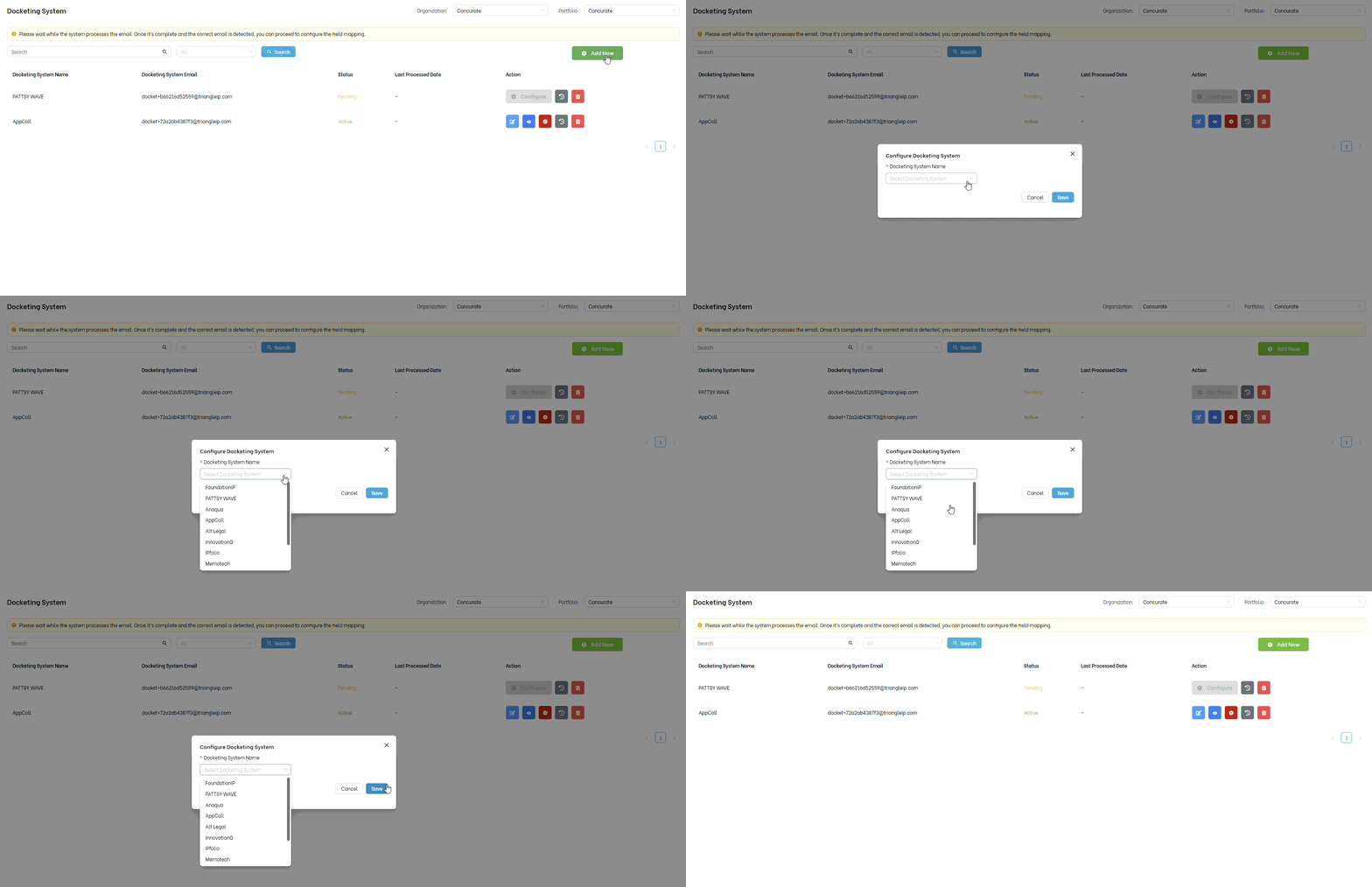
To know more, read: The TIP Tool New Feature Update: Sync With Docketing software.